Top Menu

Wikipedia

Search results

Post Top Ad

Support CSk

Post Top Ad

Support CSk

Archive

Post Top Ad

Support CSk

Author Details

Vallimanalan Pradeesh is a young teenager with computer and blogger knowledge whose age is just 15.He wants people to know the day to day life and the happenings in and around the globe

Breaking

Cinema

Facts

Education

Daily Best

Sports

No

Featured

Videos

Contact Form

Name

Email *

Message *

Followers

Tags

Sports (27) Technology (32) Video (4)

Translate

Sponsor

Microsoft

Daily Best

Youtube

Daily Best

Comments

Proud Supporter

CSK
Showing posts with label Daily Best. Show all posts

Happy International Firefighters Day

May 04, 2018


“The role of a firefighter in today’s society – be it urban, rural, natural environment, volunteer, career, industrial, defence force, aviation, motor sport, or other is one of dedication, commitment and sacrifice – no matter what country we reside and work in. In the fire service we fight together against one common enemy – fire – no matter what country we come from, what uniform we wear or what language we speak.”
– Lt JJ Edmondson, 1999
Firefighters dedicate their lives to the protection of life and property. Sometimes that dedication is in the form of countless hours volunteered over many years, in others it is many selfless years working in the industry. In all cases it risks the ultimate sacrifice of a firefighter’s life.
International Firefighters’ Day (IFFD) is a time where the world’s community can recognise and honour the sacrifices that firefighters make to ensure that their communities and environment are as safe as possible. It is also a day in which current and past firefighters can be thanked for their contributions.
International Firefighters’ Day is observed each year on 4th May. On this date you are invited to remember the past firefighters who have died while serving our community or dedicated their lives to protecting the safety of us all. At the same time, we can show our support and appreciation to the firefighters world wide who continue to protect us so well throughout the year.
By proudly wearing and displaying blue and red ribbons pinned together or by participating in a memorial or recognition event, we can show our gratitude to firefighters everywhere.
The IFFD ribbons are linked to colours symbolic of the main elements firefighters work with – red for fire and blue for water. These colours also are internationally recognised as representing emergency service.

On the first Sunday in May at noon please Sound Off in respect of past firefighters.
A special time to stop and reflect on the sacrifices made by firefighters is held on the first Sunday in May at noon local time each year when fire sirens sound for 30 seconds followed by a minute’s silence in memory of, and respect for, all firefighters who have been lost in the line of duty or passed on before us. This is known as the “Sound Off“.

Happy International Lumpy Rug Day

May 03, 2018


Rugs, a piece of decoration that are the foundation of design in many homes. Cultures all over the world have developed their own rugs, complete with colors, patterns, and unique weaving styles that say “this is us, our rugs, our culture.” But rugs are meant to be soft and comfortable on the feet, a way to turn a cold and uninviting wooden or dirt floor into a luxurious experience. Lumpy Rug Day reminds us that smooth, plush rugs are wonderful for the feet, but lumpy rugs are an unfortunate thing indeed.
History of Lumpy Rug Day
Rugs as we’ve mentioned have been around through every culture for centuries. There are different kinds of rugs, as many as you could imagine, including plush wool rugs, plastic woven rugs, intricate grass mats (which are technically a rug), just to name a few. If materials exist that can be woven together, they’ve likely been utilized to create a comfortable floor covering for homes. They serve important roles in homes as well, keeping bare feet off of cold stone, wood, or dirt floors. They help to suppress dust, as well as providing a colorful decoration to lighten up a room.

Lumpy Rug Day was established to encourage people to pay attention to their lumpy rugs. Over time fibers can get pulled and bunch up, creating an unfortunate lump in the rug. But is it so unfortunate? No rug can go forever without gathering a few lumps of its own, and maybe the appropriate thing to do is appreciate it for the age and character given. Or, if you want to restore the plush comfort of your rugs, you can take Lumpy Rug Day to repair your rug and restore it to its pristine state.
How to Celebrate Lumpy Rug Day
We’ve mentioned a couple of things you can do to celebrate lumpy rug day above, but how exactly do you repair a rug? Well, if you don’t know there are plenty of classes you can take to help show you how to repair your rugs. Maybe you have a rug of some age and don’t know its history, take it to an expert to identify your lumpy rug and tell you its origins. Lumpy Rug Day can also be a great opportunity to replace your old rugs, and who doesn’t like an updated look to their home? Get out there and honor your rugs, whether with a funeral for the old and worn, or a revitalization for a treasured antique.

Happy International Scurvy Awareness Day

May 02, 2018
Today is International Scurvy Awareness Day. Its founders admit it is an exceptionally weird holiday and say they would like nothing more than to render it obsolete. As they point out on LimeStrong.com, although the cure for scurvy has been known for centuries, hundreds are diagnosed with it each year in the U.S. and around the world.
A single hospital, Bayside Medical Center in Springfield, MA, reported that from 2009 through 2014, thirty patients were examined for a variety of mysterious symptoms eventually identified as scurvy. Some doctors refer to it as a “million-dollar diagnosis” because it takes so many modern tests to find a disease considered non-existent in developed nations.
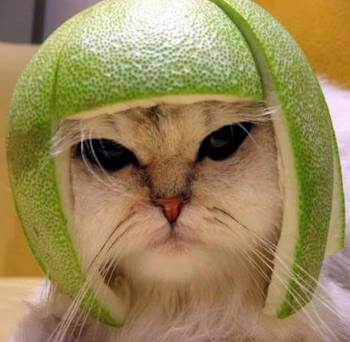
The folks at LimeStrong believe people are more likely to learn about scurvy’s effects—such as bleeding gums, tooth loss, and muscle weakness—if the facts are accompanied by a bit of humor and cats wearing fruit helmets. Scurvy can be prevented by eating a couple of servings of citrus fruits and vegetables, such as bell peppers and broccoli, per week.
Mr. Boots says, “Have a happy International Scurvy Awareness Day!” Who could say no to this face?

Happy International Workers Day

May 01, 2018


Everybody loves to spend time on their hobbies–no matter whether you love shopping, diving, going to the cinema, travelling, hiking, or one of thousands of other leisure activities, you probably spend a large part of your life figuring out how to it more often. Unfortunately, however, the truth is that in order to have the money to do what you love to do, you also have to work. Of course, there are some lucky people among us truly love their jobs, but regardless of how much we enjoy doing our jobs, we have to do them. But we should also remember that each and every little job we do is necessary and valuable to society, from garbage man to nurse to teacher to policeman. Together, all of us build society, making it a better, safer place with each passing year. Now, isn’t that something worth celebrating? We think it is, so let’s celebrate International Workers’ Day together!
The History of International Workers’ Day
In the late 19th Century, trade union and labor movements grew right along with countless industries, prompting trade unionists to begin to choose various days to celebrate the people’s labor. In the United States and Canada, a September holiday called Labour Day, was first proposed in the 1880s. Several years later, in 1887, North America officially established Labor Day.
May 1st, on the other hand, was chosen for International Workers’ Day to commemorate the Haymarket affair of May 4th 1886 in Chicago, when an unidentified person threw a bomb at the police, who responded by opening fire on the workers, killing four of them. Today, International Workers’ day is celebrated on every continent.
How to Celebrate International Workers’ Day
This day was always meant to celebrate the work of the everyday man, so if you’ve been feeling a bit underappreciated recently, today is the day for you to do what you feel like doing and treat yourself! Take the day off (if it’s not a day off work in your country of residence) and go do something you want to do for a change. Has it been ages since you visited the mountains? Pack a lunch and spend the day enjoying nature and the view from the peak you decide to conquer. Has your back been causing you increasing discomfort recently? Time to make an appointment with a good masseuse! And if it’s been forever since you took the time to make yourself a decent meal, today is the perfect day to buy all of the ingredients you need and spend as much time as you need cooking something delicious and nutritious. If you’re feeling a bit more politically inclined, you could attend one of the many rallies or marches organized in many cities worldwide dedicated to raising awareness about wages and working conditions. After, the first step towards making any kind of change is making people aware of the issue!

Happy International Jazz Day

April 30, 2018


International Jazz Day History

International Jazz Day serves as a celebration of jazz music and its contribution to education, peace, unity, dialogue and cooperation. Jazz is a form of music that was born in New Orleans in the late 1800s and early 1900s. Since then, it has spread around the world and evolved into many different types of jazz music.

International Jazz Day was designated by UNESCO in November of 2011 in an effort to highlight the role that jazz plays in uniting people from all over the world. It is celebrated annually on April 30th.

International Jazz Day Facts & Quotes

  • Washington D.C. has been chosen as the International Jazz Day Global Host City for 2016. Paris, France, hosted the day in 2015.
  • Nobody knows for sure where the word jazz originated. It is widely believed to come from the slang word jasm, though this is not confirmed.
  • There are an estimated 33,000 jazz musicians in New York, which is considered a jazz music hub. Duke Ellington was one of these famous jazz musicians.
  • If you have to ask what jazz is, you’ll never know. – Louis Armstrong, influential early jazz musician
  • As far as playing jazz, no other art form, other than conversation, can give the satisfaction of spontaneous interaction. – Stan Getz, American Jazz Saxophonist

International Jazz Day Top Events and Things to Do

  • Attend the international Jazz Day Global Concert in Washington DC. The concert features internationally renowned jazz musicians. It is also broadcasted across the US on ABC and streamed around the world by the UN and UNESCO.
  • Watch a movie about jazz and music. Some suggestions are: Whiplash (2014), Jazz on a Summer’s Day (1959), Sweet and Lowdown (1999) and The Jazz Singer (1927).
  • Donate to the Jazz Foundation of America. All funds donated are used to help preserve the interest of an art congress recently designated a rare and valuable national treasure.
  • Spread awareness of social media by using the hashtags #jazzday, #jazz and #internationaljazzday.
  • Visit one of many jazz museums or jazz concert halls in the US. There are many museums in the US located throughout the southern states up to New York.

Happy International Dance Day

April 29, 2018
International Dance Day is a global celebration of dance, created by the Dance Committee of the International Theatre Institute (ITI), the main partner for the performing arts of UNESCO. The event takes place every year on 29th April, the anniversary of the birth of Jean-Georges Noverre (1727-1810), the creator of modern ballet. The day strives to encourage participation and education in dance through events and festivals held on the date all over the world. UNESCO formally recognize ITI to be the creators and organizers of the event.

About

Every year, since its creation in 1982, an outstanding dance personality is selected to write a message for International Dance Day. ITI also create a flagship event in a selected host city, at which there are dance performances, educational workshops, humanitarian projects and speeches made by ambassadors, dignitaries, dance personalities and the selected Message Author for that year.
The day is a celebration day for those who can see the value and importance of the art form dance, and acts as a wake-up-call for governments, politicians and institutions which have not yet recognised its value to the people.

Event

To mark International Dance Day each year, on the 29 April, the International Theatre Institute invites its members along with dancers, choreographers, dance students and enthusiasts to join them in a Gala Celebration.
The Gala Celebration takes place in a chosen host city decided on by the Executive Council of the International Theatre Institute – for instance in 2017 it was held in Shanghai, China, and in 2018 it will be held in Havana, Cuba 
The programme of the Gala Event can vary, but usually consists of top-quality dance performances from around the world, student performances, keynote speeches, and a recital of the Message for that year’s event read, in person, by that years selected message author.
In Shanghai 2017 for instance, the event became a three-day celebration with greater emphasis on education through dance workshops and presentations led by an international cast of dance experts. The evenings were reserved for performances, the finale of which was the Gala Celebration. The Shanghai event also had a humanitarian aspect, with much of its focus being on celebrating the achievements of disabled dancers and encouraging disabled children to dance 
Beyond the Gala itself, ITI Centres across the globe are encouraged to mark the 29th April in their own country through special educational initiatives, humanitarian drives, dance performances and festivals

Message Authors

To help publicise International Dance Day each year the International Theatre Institute selects an outstanding personality from the world of dance to be the Message Author for the event. In the message, it is hoped that the author can underline the relevance and power of dance. Past authors have included Trisha Brown, Alicia Alonso, and Merce Cunningham.
As 2018 marked the 70th Anniversary of ITI, 5 Message Authors were selected for the 2018 event, one from each of the 5 UNESCO Regions. The 5 authors were; Georgette GEBARA (Lebanon, Arab Countries), Salia SANOU (Burkina Faso, Africa), Marianela BOAN (Cuba, The Americas), Willy TSAO (China, Asia-Pacific) and Ohad NAHARIN (Israel, Europe).
List of past Message Authors

Happy English Language Day

April 23, 2018

"What's in a name? That which we call a rose by any other name would smell as sweet."
— William Shakespeare, "Romeo and Juliet"
English, along with French, is one of the two working languages of the United Nations Secretariat, and one of the Organization's six official languages.
Because it is so widely spoken, English is often referred to as a "world language", or the lingua franca of the modern era.

Language Days at the UN

English Language Day at the UN is celebrated on 23 April, the date traditionally observed as both the birthday and date of death of William Shakespeare. The Day is the result of a 2010 initiative by the Department of Public Information, establishing language days for each of the Organization's six official languages. The purpose of the UN's language days is to celebrate multilingualism and cultural diversity as well as to promote equal use of all six official languages throughout the Organization.
Under the initiative, UN duty stations around the world celebrate six separate days, each dedicated to one of the Organization's six official languages.
Language Days at the UN aim to entertain as well as inform, with the goal of increasing awareness and respect for the history, culture and achievements of each of the six working languages among the UN community. 
23-30 April 23 April 11.30 a.m. - 3.30 p.m. 5-7 p.m. Starts at 4 p.m. on 23 April 23 April 12-2.15 p.m. 4-5.30 p.m. Photo Exhibit and Slide Show Joint Celebrations of English & Spanish Language Days Authors-for-Literacy event Quiz about English language English: a Nobel language E N G L I S H L A N G U A G E D A Y A T T H E U N UN OG UN HQ H IGH L IGH T S M O R E I N F O 2 3 A P RIL 2 018 Venue: Palais des Nations, UNOG Cinema Access: Open to all UNOG grounds pass holders Presented by the English Translation & Editorial Service of the Department for General Assembly and Conference Management, and the Office of Human Resources Management's Language and Communications Programme. Presented by the UN Correspondents Association (UNCA) and the Office of Human Resources Management's Language and Communications Programme. All contributions will benefit literary projects of UN Staff 1% for Development Fund. Photo exhibit and slideshow, quizzes, information table and reading of excerpts from Shakespeare & Cervantes. Reception followed by a conversation with award-winning fiction writer Elizabeth Strout and renowned novelist Katherine Vaz and acclaimed poet Major Jackson. Screening of The Remains of the Day, the film adaptation of Nobel Laureate Kazuo Ishiguro’s novel. Afternoon tea for all UNOG grounds pass holders, hosted by the UNOG Library Events Room (B-135). Events hosted by the UNOG Division of Conference Management in cooperation with the UNOG Library. More info: https://bit.ly/2HdtpB5 Venue: Albano Building, Lobby. Access: Open to all with UN grounds pass. Prizes: Various prizes Access: UN staff and interns. Available online (URL TBC) Venue: General Assembly Building, 3B, UN Learning Centre Access: Open to all UN grounds pass holders Venue: Secretariat Building, room S-310 Access: Open to all UN grounds pass holders English Language Day in words and pictures, presented by the English Translation & Editorial Service of the Department for General Assembly and Conference Management, in collaboration with the Office of Human Resources Management's Language and Communications Programme. In its resolutions on multilingualism, the UN General Assembly has welcomed the language days established by the Secretariat in 2010, and called for their continued observance in order to raise awareness of the use of the official languages, and, where possible, other languages, at the UN. To learn more about UN Language Days : https://bit.ly/2vkMT5h To learn more about English Language Day at the UN: https://bit.ly/1o39RDN Presented by the Office of Human Resources Management's Language and Communications Programme.

Multilingualism and the UN


Happy Auctioneers Day

April 21, 2018
Some of the planet’s biggest personalities, loudest voices and quickest talkers are celebrated on Auctioneers Day. It’s a time to remember that auctioneering is one of the world’s most ancient professions, having begun more than 2,000 years ago.
In fact, the very first auction was held about 500 B.C. in Babylon. The late 17th century saw the establishment of the world’s oldest, still-practising auction house, Stockholms Auktionsverk. America’s first president, one George Washington, was a big fan of scoring himself a hot deal via the mallet. Since the 1950s, the humble auction has expanded to include a plethora of financial institutions and marketplaces. These days, of course, there’s eBay.
To celebrate, many auctioneers spend the day working as volunteers, often in local communities. They’re seen running charity events, using their skills and time to fundraise. Some even hold auctions in which the auctioneers themselves are put up for sale.


Happy Bicycle Day

April 19, 2018


Bicycle Day does not, as one might expect, celebrate the ubiquitous two-wheeled mode of transport, beloved of city- and country- dwellers alike the world over. Rather, it celebrates a particular historical event that involves a trip on a bicycle.
‘Trip’ is the operative word here, as Bicycle Day commemorates the first time Dr. Albert Hofmann intentionally took Lysergic acid diethylamide (LSD) having accidentally discovered it three days previously. Following the deliberate 250mcg dose he started to feel a little odd, so decided to ride his bicycle home. What happened on that trip would lead to LSD becoming a very popular recreational drug – not without its problems though, which is why taking LSD is not a recommended way to celebrate Bicycle Day.
Instead, why not read Ken Kesey’s One Flew Over the Cuckoo’s Nest while listening to ‘Lucy in the Sky With Diamonds’? Trippy, but perfectly safe.

Happy World Heritage Day

April 18, 2018
World Heritage Day
World Heritage Day is observed every year on 18 April. It is celebrated to raise the awareness about the diversity of cultural heritage, monuments, sites, the efforts required to protect and conserve it and to draw attention towards its vulnerability.
We all know that Ancient buildings and monuments are an asset for us and for the world. Therefore, Heritage Day is a collective effort of the communities in the world to do the needful. This day maintain the cultural legacy and make people to think about its susceptibility.
Theme of World Heritage Day 2018
World Heritage Day 2018 Theme is “Heritage for Generations”. 
History of World Heritage Day
World Heritage Day is celebrated every year on 18 April to preserve the human heritage and to recognise all the efforts of relevant organizations. The International Council on Monuments and Sites (ICOMOS) in 1982 announced, 18 April as the World Heritage Day. This was approved by General Assembly of UNESCO in 1983, with an aim of enhancing awareness about the importance of cultural heritage, monuments and to conserve them.
The International Council on Monuments and Sites (ICOMOS) organisation was established on the principles set forth in the Venice Charter, also known as the 1964 International Charter on the Conservation and Restoration of Monuments and Sites.
List of Global Agricultural Heritage Systems (GIAHS) Sites in India
How World Heritage Day 2018 is celebrated
According to the International Council on Monuments and Sites (ICOMOS):
1. Inter-generational transfer of knowledge: To emphasise and exchange the importance of knowledge between generations to promote the ICOMOS ethos for the conservation and protection of cultural heritage.
2. Youth Leadership: In each country professionals will emerge and organise events that will focus on reaching the younger members of the wider public community by showcasing the creative use of social media.
This communication process across the generations of heritage practitioners generates enriching exchanges. Even to combine the knowledge of experienced practitioners with the newer members will bring a more holistic approach to ongoing initiatives.
Therefore, to celebrate World Heritage Day is an opportunity to emphasise the importance of safeguarding, conserving and preserving our heritage. Various conferences related to preserving heritage culture, lectures, training sessions, round-table discussions, poster sessions etc. will pave the importance of heritage and celebrates it on a wider scale.
UNESCO World Heritage Sites in India
A UNESCO World Heritage Site is a place that is listed by the United Nations Educational, Scientific and Cultural Organization as of special cultural or physical significance. Total number of UNESCO World Heritage Site in India is 36 (1 mixed, 7 Natural and 28 Cultural).
World Heritage Day gives us an opportunity to conserve and preserve our heritage culture which paves an ancient importance. They have an outstanding universal value.

Happy Ford Mustang Day

April 17, 2018

It’s got sleek lines and a powerful engine, its name speaks of wild places and adventurous times. For generations it was the car of choice for action heroes and spies alike, even James Bond drove one in Goldfinger. For some it was the very flavor of summer sunsets and nighttime drives on youth’s misadventures, but it always brought them home safely. We’re talking about the Ford Mustang, of course, and Ford Mustang Day celebrates this incredible and iconic piece of American engineering.
History of Ford Mustang Day
The Ford Mustang was first introduced to the world in April of 1964. The World’s Fair was in full swing, and this car was Ford’s introduction as the car of the future. This introduction of the Mustang also was the introduction of the first Pony Car, to wit, a line of small sporty cars with sleek lines and an affordable price-tag. Sales of the Mustang proved that this car was going to become an American favorite, with well over 400,000 sales in the first year it was in production, an unprecedented success for an unprecedented vehicle.
The muscle car of the time was the Thunderbird, and that beauty was the one that every serious sports car fanatic wanted to own. The Mustang came into existence with the idea not of replacing that vehicle, but instead putting its like within reach of the working class. Such was its popularity that over 500 clubs celebrating the Mustang came into existence within just 3 years of its release. This is the kind of fanaticism that’s usually saved for classic cars, but the Mustang just rolled right in and took its place as a new classic right off the bat. Such was the popularity of the Mustang that 60 years later over 9 million of them have been sold. Ford Mustang Day celebrates this vehicle that came out of nowhere to become an American institution.
Celebrating Ford Mustang Day
All over the country (and indeed, all over the world) festivals and celebrations are held that honor this vehicle. 60 years of different models of this line are brought out by enthusiasts, most maintained in impeccable shape, standing as an icon of their time. You can find these with a simple web search, and then go out and see the march of time and technology as it reshaped the overall appearance of the Mustang while leaving its underpinning sense of aesthetic and purpose untouched. Ford Mustang Day presents an opportunity to really appreciate what American Engineering can do, and how a car can change the face of the automotive industry.

Happy Save The Elephant Day

April 16, 2018


Save The Elephant Day

They might be wildlife icons, but, sadly, elephants are in crisis. Save The Elephant Day is a chance to show our love and support for these much-loved giants and raise awareness of the threats to their future in both Africa and Asia, ranging from ivory poachers and traffickers to loss of habitat.
The ideal way to mark the day is to donate to a charity helping elephants or organise an event in aid of these beautiful but threatened beasts. You could also watch a wildlife film about elephants or sign a petition to raise awareness.
April 16th is the anniversary of Elephant Nature Park in Thailand moving to its permanent location.
Elephant Nature Park
Elephant Nature Park is a 250-acre sanctuary and rescue centre for elephants in the Northern Thailand, Chiang Mai Province, approximately 60 kilometres (37 mi) from Chiang Mai City. Founded in the 1990s, the project's aim is to provide sanctuary for distressed elephants from all over Thailand. Set in a natural valley, bordered by a river, and surrounded by forested mountains the sanctuary and surrounding area offers a glimpse of rural life.
In an area which abounds with elephant parks and camps, this is the only one which rescues mistreated elephants, allows them heal and to live naturally in their self-chosen family groups. The emphasis is on rescue and conservation rather than 'shows' or training. Over 400 Dogs, 50 Buffalo, 30 Cats, 2 Horses, 2 Pigs, a Macaque and a Cow, also live peacefully at the park.
The park is open to visitors all year round. Day trips and overnight stays can be arranged as can longer-term volunteer placements.

Happy World Art Day

April 15, 2018

World Art Day

World Art Day is an international celebration of the fine arts which was declared by the International Association of Art (IAA) in order to promote awareness of creative activity worldwide.[1][2]

Establishment[edit]

A proposal was put forward at the 17th General Assembly of the International Association of Art in Guadalajara to declare April 15 as World Art Day, with the first celebration held in 2012. This proposal was sponsored by Bedri Baykam of Turkey and co-signed by Rosa Maria Burillo Velasco of Mexico, Anne Pourny of France, Liu Dawei of China, Christos Symeonides of Cyprus, Anders Liden of Sweden, Kan Irie of Japan, Pavel Kral of Slovakia, Dev Chooramun of Mauritius, and Hilde Rognskog of Norway. It was accepted unanimously by the General Assembly.[1][3][4]
The date was decided in honor of the birthday of Leonardo da Vinci. Da Vinci was chosen as a symbol world peace, freedom of expression, tolerance, brotherhood and multiculturalism as well as art’s importance to other fields.[2][4]

Past celebrations[edit]

The first World Art Day on April 15, 2012 was supported by all IAA national committees and 150 artists, including those of France, Sweden, Slovakia, South Africa, Cyprus and Venezuela, but the intention of the event is universal.[3][4] Events varied from special museum hours to conferences and more.[1] For example Venezuela held outdoor art exhibitions with paintings, sculptures, prints, video and more, as well as a Florentine cooking demonstration in honor of Da Vinci.[4]
More events were held in 2013 all over the world including the Mbombela municipal art museum in South Africa.[5] However, there was controversy at celebrations in Sweden when the Swedish minister of Culture, Lena Adelsohn Liljeroth, cut into the genitals of a cake representing a black African woman. The performance art was meant to be a statement against genital mutilation but many found the depiction racist.[6]
World Art Day has also been supported online, especially by the Google Art Project.[7]


Happy Tamil New Year

April 14, 2018
Puthandu
Tamil New Year
A colorful Puthandu welcome to Sinhala and Tamil New Year in Sri Lanka.jpg
Tamil new year decorations for Puthandu
Observed byTamil in IndiaSri LankaMauritiusMalaysiaSingapore[1]
Typereligious, social
SignificanceTamil New Year
CelebrationsFeasting, gift-giving, visiting homes and temples
DateFirst day of Chitterai in the Tamil calendar
2018 dateSaturday, 14 April[2]
Related toVaisakhiVishu (Kerala), Burmese New YearCambodian New YearLao New YearMalayali New YearOdia New YearSri Lankan New YearThai New Year

Tamil Puthandu (Tamil: தமிழ்புத்தாண்டு), also known as Puthuvarusham or Tamil New Year, is the first day of year on the Tamil calendar.[3][1][4] The festival date is set with the solar cycle of the lunisolar Hindu calendar, as the first day of the Tamil month Chithirai. It therefore falls on or about 14 April every year on the Gregorian calendar.[1] The same day is observed by Hindus elsewhere as the traditional new year, but is known by other names such as Vishu in Kerala, and Vaisakhi or Baisakhi in central and north India.[1]
On this day, Tamil people greet each other by saying "Puttāṇṭu vāḻttukkaḷ!" (புத்தாண்டு வாழ்த்துக்கள்) or "Iṉiya puttāṇṭu nalvāḻttukkaḷ!" (இனிய புத்தாண்டு நல்வாழ்த்துக்கள்), which is equivalent to "Happy new year".[5] The day is observed as a family time. Households clean up the house, prepare a tray with fruits, flowers and auspicious items, light up the family Puja altar and visit their local temples. People wear new clothes and youngster go to elders to pay respects and seek their blessings, then the family sits down to a vegetarian feast.[6]
Puthandu is also celebrated by Tamil outside Tamil Nadu and Puducherry, such as in Sri LankaMalaysiaSingaporeReunionMauritius and other countries with Tamil Diaspora.[1][4]

Origin and significance[edit]

A traditional arrangement of festive foods for Puthandu.
The Tamil New Year follows the spring equinox and generally falls on 14 April of the Gregorian year.[1] The day celebrates the first day of the traditional Tamil calendar and is a public holiday in both Tamil Nadu and Sri Lanka. The same date is observed as the traditional new year in AssamWest BengalKeralaManipurTripuraBiharOdishaPunjabUttar PradeshUttarakhandHimachal PradeshHaryanaRajasthan as well as in Nepal and BangladeshMyanmarCambodiaLaosThailand, and Sinhalese in Sri Lanka also celebrate the same day as their new year,[7] likely an influence of the shared culture between South and Southeast Asia in the 1st millennium CE.[8]
There are several references in early Tamil literature to the April new year. Nakkirar, Sangam period author of the Neṭunalvāṭai, wrote in the third century CE that the sun travels from Mesha/Chitterai through 11 successive signs of the zodiac.[9] Kūdalūr Kizhaar in the third century CE refers to Mesha Raasi/Chitterai as the commencement of the year in the Puṟanāṉūṟu.[10][11] The Tolkaapiyam is the oldest surviving Tamil grammar that divides the year into six seasons where Chitterai marks the start of the Ilavenil season or summer. The 8th century Silappadikaaram mentions the 12 Raasis or zodiac signs starting with Mesha/Chitterai.[12] The Manimekalai alludes to the Hindu solar calendar as we know it today. Adiyarkunalaar, an early medieval commentator or Urai-asiriyar mentions the twelve months of the Tamil calendar with particular reference to Chitterai. There were subsequent inscriptional references in Pagan, Burma dated to the 11th century CE and in Sukhothai, Thailand dated to the 14th century CE to South Indian, often Vaishnavite, courtiers who were tasked with defining the traditional calendar that began in mid-April.[13]

Celebration[edit]

Tamil people celebrate Puthandu, also called Puthuvarusham, as the traditional New Year.[4] This is the month of Chittirai, the first month of the Tamil solar calendar, and Puthandu typically falls on 14 April.[3] In some parts of Southern Tamil Nadu, the festival is called Chittirai Vishu. On the eve of Puthandu, a tray arranged with three fruits (mango, banana and jack fruit), betel leaves and arecanut, gold/silver jewellery, coins/money, flowers and a mirror.[14] This is similar to Vishu new year festival ceremonial tray in Kerala. According to the Tamil tradition, this festive tray is auspicious as the first sight upon waking on the new year day.[3] The home entrances are decorated elaborately with colored rice powder and these designs are called kolams.[15]
In the temple city of Madurai, the Chitterai Thiruvizha is celebrated in the Meenakshi Temple. A huge exhibition is held, called Chitterai Porutkaatchi.[3] On the day of Tamil New Year, a big Car Festival is held at Tiruvidaimarudur near Kumbakonam. Festivals are also held at TiruchirapalliKanchipuram and many other places.[3]
Tamil Hindus decorate their homes with various auspicious colorful geometric designs from rice powder called Kolam.[15]
Sri Lankan Tamils observe the traditional new year in April with the first financial transaction known as the 'Kai-vishesham' where youngsters go to elders paying their respect, and elders giving their blessings and gifting pocket money to them. The event is also observed with the 'arpudu' or the first ploughing of the ground to prepare for the new agricultural cycle. The game of 'por-thenkai' or coconut wars between youth is played in villages through the Tamil north and east of the island while cart races are also held.[16] The festive Puthandu season in April is a time for family visits and the renewal of filial bonds.[17] It coincides with the Sinhalese new year season.[18]
Two styles of mango-based pachadi dish, that combines many bitter-sour-sweet-pungent flavors to mark Puthandu.
Later in the day, families enjoy a feast.[14] A special dish called Mangai-pachadi is prepared from a variety of flavors, similar to pacchadi of new year foods of Ugadi and Vishu.[14][19] It is made from sweet jaggery, astringent mustard, sour raw mango, bitter neem, and red chilies. These complex dish is ritually tasted by Tamils, as similar multi-flavors are by Hindus elsewhere on the new year. Such traditional festive recipes, that combine different flavors, are a symbolic reminder that one must expect all flavors of experiences in the coming new year, that no event or episode is wholly sweet or bitter, experiences are transitory and ephemeral, and to make the most from them.[20]
In Malaysia and SingaporeTamils join Sikhs, Malayalees and Bengalis to celebrate the traditional new year in mid-April with leaders across the political spectrum wishing the ethnic Indian community for the new year. Special religious events are held in Hindu temples, in Tamil community centers and Gurdwaras. Cultural programs and media events also take place. Its a day of celebration for the Indian community.[21][22][23][24][25]
The 2018 Tamil New Year name is தமிழ் புத்தாண்டு ஸ்ரீ விளம்பி.

Controversy[edit]

A Puthandu decoration at a Hindu temple
The previous Dravida Munnetra Kazhagam (DMK)-led Government of Tamil Nadu had declared in 2008 that the Tamil new year should be celebrated on the first day of Tamil month of Thai (14 January) coinciding with the harvest festival of Pongal. The Tamil Nadu New Year (Declaration Bill 2008) was enacted as the state law by the DMK assembly members and its Tamil Nadu Government on 29 January 2008.[26]This law of the DMK majority-led government was subsequently rescinded by a separate act of legislation in the Tamil Nadu Assembly with an AIADMK majority-led government on 23 August 2011.[27][28][29] Many in Tamil Nadu ignored the government legislation that rescheduled the festival date, and continued the celebration of their traditional Puthandu new year festival in mid-April.[30][31] The Governor and Chief Minister of the Indian Union Territory of Puducherry, which has an ethnic Tamil majority, felicitated the public for the Tamil new year in April 2010.[32]
The legislative reach to change the traditional religious new year by the DMK government was questioned by Hindu priests.[33] The law was met with resistance by Tamils in the state and elsewhere.[34][35][36] It was also challenged in court.[37][38] The then opposition All India Anna Dravida Munnetra Kazhagam (AIADMK) and Marumalarchi Dravida Munnetra Kazhagam (MDMK) in Tamil Nadu subsequently condemned the decision of the DMK Government in that state and urged their supporters to continue celebrating the traditional date in mid-April.[39]Tamils in Sri Lanka, Singapore, Malaysia and Canada continued to observe the new year in mid-April.[40][41][42][43][44]
The previous state government in Tamil Nadu in an effort to placate popular sentiment announced that the same day will be celebrated as a new festival renamed as “Chithirai Tirunal” (the festival of Chithirai). The day remained a public holiday in Tamil Nadu under the DMK government, but not as Tamil new year, but purportedly to commemorate Dr. B.R Ambedkar, who was the Chairman of the Drafting Committee of Indian Constitution. All television channels in Tamil Nadu continued to telecast festive “Chithirai Tirunal Special Programs” on 14 April 2010. The leader of the AIADMK, Jayalalitha refused to recognize the repackaged festival, and felicitated the Tamil people for the traditional Tamil New Year. The MDMK leader Vaiko, followed suit.[45] The controversy between the two dates subsided and the official celebrations during the traditional new year in April revived.[46][47][48][49]

Related festivals[edit]

The Puthandu new year day is celebrated elsewhere but called by other names. For example, it is called Vaisakhi by Hindus and Sikhs in north and central India, which too marks the solar new year.[50][51][8] Some examples include:
  1. Vishu in Kerala
  2. Ugadi in Andhra pradesh and Telangana
  3. Vaisakhi in central and north India
  4. Pohela Sankranti in Odisha
  5. Pohela Boishakh in West Bengal and Tripura, as well as Bangladesh
  6. Rongali Bihu in Assam
  7. Bikram Samwat / Vaishak Ek in Nepal
However, this is not the universal new year for all Hindus. For some, such as those in and near Gujarat, the new year festivities coincide with the five day Diwali festival. For others, the new year falls on Ugadi and Gudi Padwa, which falls a few weeks before Puthandu.[8]

Southeast Asia and Sri Lanka[edit]

The same day every year is also the new year in parts of Southeast Asia such as Myanmar, Sri Lanka and Cambodia, likely an influence of their shared culture in the 1st millennium CE.[8]
According to a 1957 publication by Gunasegaram, the new year celebrated in Sri LankaCambodia and Champa (Vietnam) is the Tamil New Year with roots in the practices of Mohenjo-daro (Indus Valley Civilization).[52][53] According to Nanacuriyan, this may be from the medieval era Tamil influence in Southeast Asia.[54]
According to Jean Michaud and other scholars, the new year celebration traditions in Southeast Asian Massif have two roots.[55] One is China, and this influence is found for example in Vietnam and southeastern China. These Sino-influenced communities celebrate the new year in the first or second lunar month after the winter solstice in December. The second group of people in the Massif celebrate the new year in mid April, much like most of India. This group consists of northeastern Indians, northeastern Myanmar, Tai speakers of Thailand, Laos, northern Vietnam and southern Yunnan.[55] The festival is celebrated in the Massif in some ways unlike Puthandu. It is marked by an occasion to visit family and friends, splashing others with water (like Holi), drinking alcohol, as well as later wearing jewelry, new clothes and socializing.[55] The new year festival is called regionally by different names:
  1. Aluth Avuruthu in Sri Lanka (Sinhalese New Year).[7]
  2. Chol Chnam Thmey in Cambodia
  3. Songkan / Pi Mai Lao in Laos
  4. Songkran in Thailand
  5. Thingyan in Burma
 
Copyright © Fact & Zeel. Blog Templates Designed by OddThemes